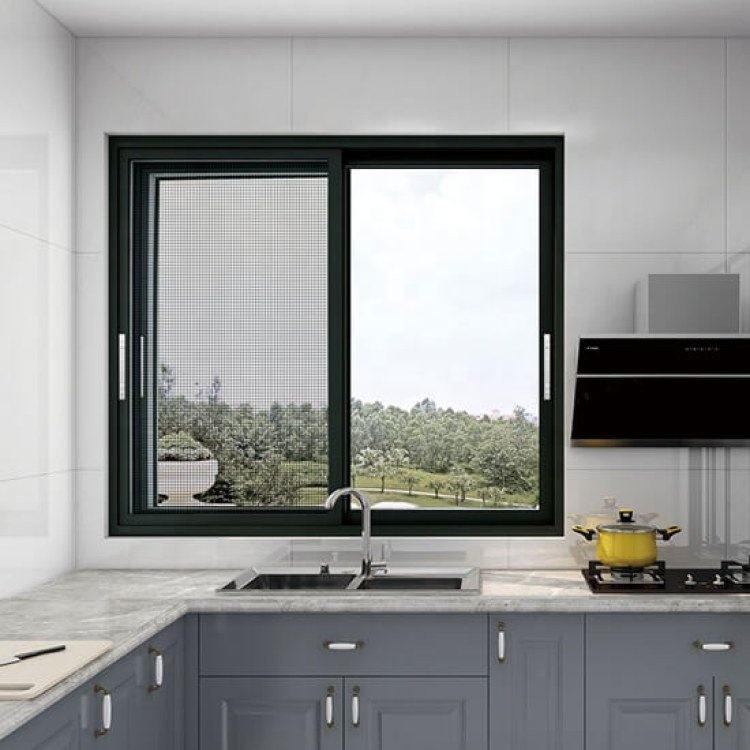
During architectural fenestration maintenance, contractors and homeowners often observe a perplexing issue: "Why does authentic Grade 304 stainless steel security mesh develop a white powdery film or frosty spots across the screen? Is this metallic corrosion, or external chemical deposition?" As a specialized manufacturer of high-tensile security screens, Ji'an Screen Mesh details the chemical mechanisms behind alkaline building dust hydration and coastal salt crystallization alongside restoration procedures.
1. The Two Primary Chemical Mechanisms Causing White Film
| Deposition Category | Source Material & Trigger Conditions | Microscopic Chemical Mechanism | Physical Morphology & Cleaning Difficulty |
|---|---|---|---|
| Alkaline Building Dust Hydration (Construction Contamination) | Window installation, plastering, wall sanding, or exterior waterproof coating work. | Highly alkaline construction dust (primarily Calcium Hydroxide, Ca(OH)₂) settles onto the mesh. Dissolved by rainwater or ambient humidity, it absorbs CO₂ and recrystallizes into insoluble Calcium Carbonate (CaCO₃) scale inside wire crossover crevices. | Forms stubborn white crusts locked within wire intersections; difficult to remove with standard plain water. |
| Marine Aerosol Crystallization (Coastal Saline Atmosphere) | Coastal regions exposed to onshore maritime salt spray and coastal winds. | Maritime winds deposit microscopic seawater droplets onto wire strands. Rapid moisture evaporation forces Sodium Chloride (NaCl) to precipitate out into fine, uniform crystalline frost. | Forms a dense, even dusting of white frost across the screen apertures; highly water-soluble and very easy to rinse off. |
2. Professional Cleaning & Restoration Procedures
Rinsing Marine Salt Frost: Because sodium chloride is highly soluble, simple washing with pressurized fresh water or gentle wiping with a microfiber cloth instantly restores original black clarity.
Removing Alkaline Cement Carbonate Scale: Never use wire scouring pads or aggressive acids that harm powder coatings. Apply mild organic cleaners (such as diluted citric acid solutions) to soften scale bonds, scrub gently along wire rows with a soft nylon brush, and flush thoroughly with clean water.
3. Sourcing FAQ
Q: Does a white powdery mesh surface mean the stainless steel is corroding?
A: No. In over 95% of cases, white residue is either construction-related calcium carbonate cement scale or evaporated sodium chloride marine crystals, while the underlying stainless steel substrate remains intact.
Q: Where to source precision-coated security screens with lower residue retention?
A: Ji'an Screen Mesh manufactures precision-woven 304 security meshes using advanced ultra-fine matte powder lines that minimize surface micro-crevices and reduce chemical scaling.